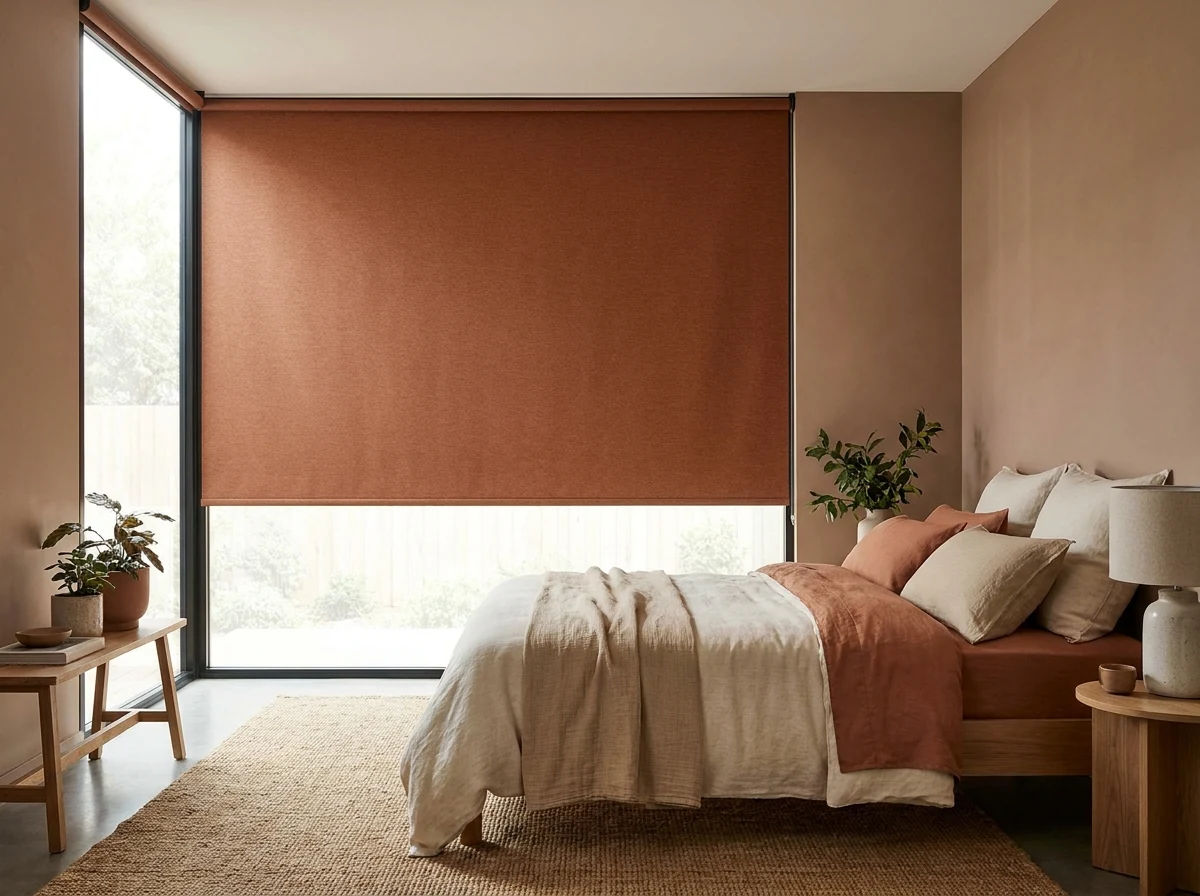
In February the sun clears the Helderberg side of the valley before most alarms go off. If a bedroom fails that test, the answer is blockout — a coated fabric that hands you back control of your own mornings. Fitted tight in the reveal it also puts a still-air layer against the glass, which the room repays you for twice a year: once in harvest heat, once in the wet cold of July.
Nobody buys a house looking over vines and then walls off the vines. Sunscreen mesh keeps the picture and takes out the punishment — the weave's openness (3%, 5% or 10%) sets the balance. Tighter weaves kill more glare and heat; looser ones keep the view crisper. For vineyard-facing glass we usually land at 3–5%.
One thing we always say out loud: mesh privacy flips at night. Once your lamps are brighter than the garden, the sightline reverses and the room becomes the view. Fine for a living room; in a bedroom, plan a second layer.
That second layer needn't be curtains. A double roller stacks blockout and sunscreen on one compact bracket — mesh for the day's view, blockout for the night's privacy and dark. It's become our default recommendation for main bedrooms that face the vines.
There's also a quieter middle path: translucent fabric, which admits soft daylight and shows nothing in either direction, day or night. Bathrooms and street-side rooms in town take to it well.
Hillside stands in Paradyskloof mostly take sunscreen, because the whole point up there is the view down the valley. On De Zalze's wide fairway-facing elevations the rollers run linked and motorised. Family houses in Welgevonden Estate order blockout for the children's rooms first and everything else second. And in Jonkershoek Valley, rollers dress the newer glazed additions once the exposed weather-side elevation has its exterior shading settled.
Ready when you are
Send the enquiry and an expert consultant will phone you back shortly to book your free in-home measure.
Request my call-back →